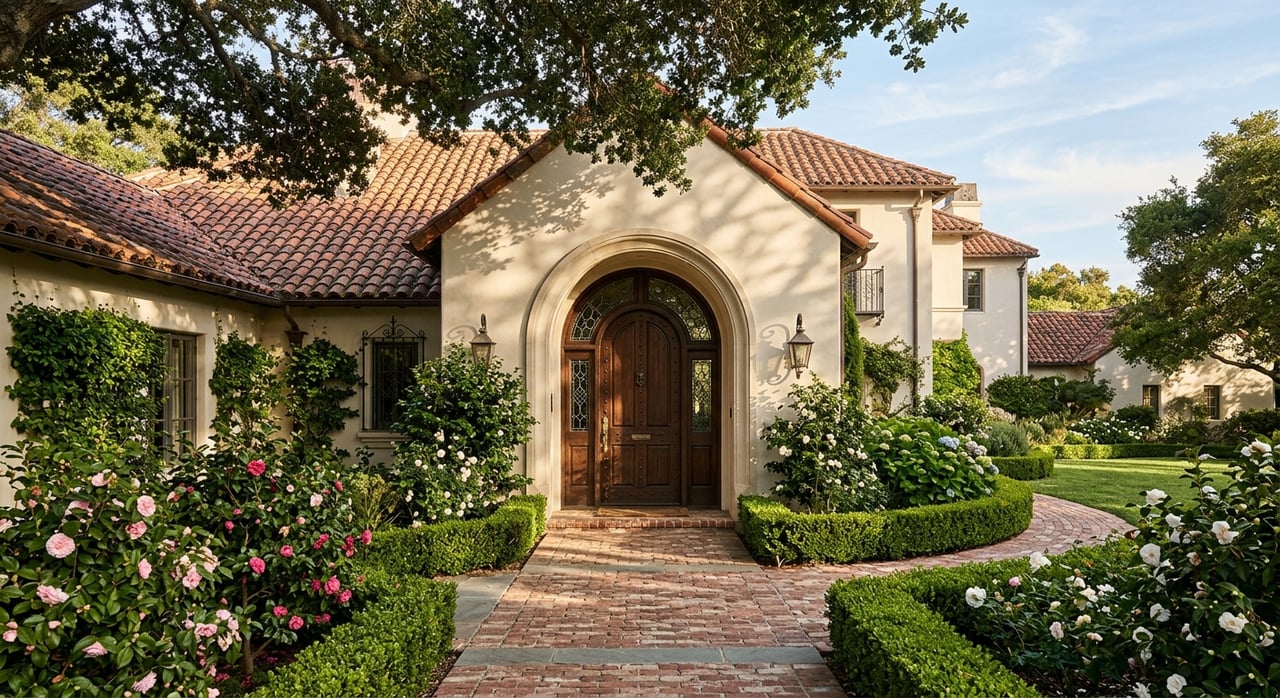
If you are drawn to Los Angeles homes with pedigree, scale, and a true sense of place, Hancock Park stands apart. This is not a neighborhood defined by quick turnover or trend-driven rebuilding. It is a preserved estate district where architecture, streetscape, and long-term character shape the ownership experience. If you are considering buying or selling here, understanding that difference can help you make smarter decisions. Let’s dive in.
What Defines Hancock Park
Hancock Park traces back to the eastern portion of Rancho La Brea, purchased by Major Henry Hancock in 1863 and later developed as a residential subdivision in the 1920s by G. Allan Hancock. That origin still matters today because the neighborhood was planned with a distinctive estate character that remains visible block after block.
The City of Los Angeles adopted the Hancock Park HPOZ in 2008. In the preservation survey area, City Planning identified 1,113 contributing resources out of 1,282 parcels, or about 86%. That level of preservation helps explain why Hancock Park still feels cohesive in a way that is increasingly rare in Los Angeles.
Why the Estates Feel So Distinct
Hancock Park is generally made up of two-story single-family residences on spacious lots, many built in the 1920s and 1930s. The area’s period of significance runs from 1920 to 1956, and that framework gives the neighborhood a strong architectural identity.
You will see a range of period-revival styles, including Tudor Revival, English Revival, Spanish Colonial Revival, Mediterranean Revival, Monterey Revival, American Colonial Revival, and French Revival. Rather than feeling repetitive, the mix creates visual richness while still maintaining continuity from one property to the next.
A major part of the appeal is not just the homes themselves, but how they sit on the land. Large setbacks, raised front yards, side driveways, rear garages, and mature street trees all contribute to the estate-like atmosphere. In some areas west of Wilshire Country Club, the streets even follow the curving edge of the golf course instead of the standard Los Angeles grid, which adds another layer of visual softness and distinction.
Historic Character Shapes Daily Living
Living in Hancock Park means your surroundings feel intentional. The neighborhood reads as a complete environment, not just a collection of houses. The consistency of facades, open front and side yards, and mature landscaping creates a calm, established setting that many buyers find hard to replicate elsewhere.
That also means the experience of ownership here is different from owning in a newer-construction area. In Hancock Park, the value is often tied as much to preserved character and streetscape continuity as it is to square footage or newer finishes. For buyers who care about architecture and setting, that can be a major advantage.
What Buyers Should Know
If you are considering a home in Hancock Park, it helps to think of the neighborhood as a preserved estate district rather than a blank slate. The appeal is clear: architectural depth, generous lots, and a residential setting that has retained its historic identity.
At the same time, this is usually not the right fit if your goal is maximum exterior design freedom. Because Hancock Park is a local historic district, exterior renovations, additions, new construction, landscaping, and even paint may require additional review through City Planning.
For many buyers, that tradeoff is exactly the point. You gain a neighborhood where the surrounding homescape is protected, but you take on more structure when planning visible changes. If your priorities include continuity, curb appeal, and long-term visual integrity, Hancock Park can be especially compelling.
Key Questions to Ask Before You Buy
- How much flexibility do you want for future exterior changes?
- Are you drawn to original architectural details and formal lot planning?
- Do mature trees, larger setbacks, and preserved facades matter to your lifestyle?
- Would you prefer a historic setting close to major amenities rather than a newer district with more redevelopment activity?
What Sellers Should Know
For sellers, Hancock Park rewards presentation that respects the home’s historic identity. Well-kept street-facing details matter here because buyers are not just evaluating the house. They are also responding to how the property contributes to the neighborhood’s larger visual story.
That means curb appeal carries unusual weight. Preserved facades, maintained landscaping, and thoughtful care of visible architectural features can shape first impressions in a meaningful way.
This is where strategic positioning becomes important. In a neighborhood like Hancock Park, marketing should do more than show rooms. It should frame the estate, the architecture, the lot planning, and the relationship between the home and the streetscape.
Renovation Rules Matter
Hancock Park’s HPOZ framework affects many types of exterior work. According to City Planning, projects can move through one of four review tracks:
- Certificate of Appropriateness
- Certificate of Compatibility
- Conforming Work on a Contributing Structure
- Conforming Work on a Non-Contributing Structure
In practical terms, owners should expect additional review for changes that affect the exterior appearance or the historic setting. The preservation plan emphasizes retaining street-visible facades, preserving mature trees, keeping front and side yards open and planted, and placing parking areas to the side or rear.
The plan also states that new fencing is strongly discouraged in most of the district. For buyers, that is an important reminder that privacy strategies in Hancock Park often work within the historic estate vocabulary rather than against it.
Historic Hancock Park vs Newer Luxury Areas
For some buyers, the right comparison is not house versus house. It is lifestyle versus lifestyle. Hancock Park offers a different ownership proposition than many newer luxury neighborhoods.
| Feature | Hancock Park | Newer-Construction Areas |
|---|---|---|
| Visual identity | Strong historic continuity | Often more varied or recently redeveloped |
| Architecture | Period-revival homes from 1920-1956 | Contemporary or recently built homes |
| Exterior changes | More review and structure | Often more design flexibility |
| Streetscape | Mature trees, setbacks, open yards | Depends on the area and development pattern |
| Overall feel | Preserved estate district | More changeable, often less uniform |
If you want architectural character and neighborhood continuity, Hancock Park has a clear edge. If you want a faster path to dramatic exterior transformation, a non-historic area may be more practical.
Location Adds Everyday Value
One of Hancock Park’s biggest advantages is how close it sits to major Los Angeles destinations while still maintaining a protected residential feel. The neighborhood is adjacent to a major cultural corridor on Wilshire Boulevard.
LACMA anchors Museum Row alongside the La Brea Tar Pits and Museum, the Craft Contemporary, the Petersen Automotive Museum, and the Academy Museum of Motion Pictures. In 2026, LACMA opened the David Geffen Galleries, adding another major cultural draw to the area.
The La Brea Tar Pits is especially notable because it describes itself as the only actively excavated Ice Age fossil site in an urban location in the world. That gives the broader area a rare combination of parkland, history, and destination-level institutions.
For shopping and dining, The Grove and the Original Farmers Market at 3rd and Fairfax are nearby. The Farmers Market has operated there since 1934, and Larchmont Village provides another close-by corridor for boutiques and cafes in the heart of Hancock Park.
A Neighborhood Protected From Overchange
Another important layer is planning context. City Planning’s Purple Line work around Wilshire/La Brea and Wilshire/Fairfax directs new growth toward transit-served corridors while protecting the character of nearby single-family neighborhoods.
For buyers, that can make Hancock Park especially attractive. You are close to major amenities and evolving parts of the city, but the neighborhood itself is shaped by preservation standards rather than broad redevelopment pressure.
That balance is part of Hancock Park’s long-term appeal. It offers a historic residential setting in a central Los Angeles location without taking on the full intensity often seen in more heavily redeveloping commercial districts nearby.
Who Hancock Park Fits Best
Hancock Park is often the right match if you value the following:
- Historic architecture with presence and detail
- Spacious lots and formal site planning
- Mature landscaping and established streetscapes
- A central Los Angeles location near cultural destinations
- A neighborhood where continuity is protected
It may be less ideal if your main priority is unrestricted exterior reinvention. In Hancock Park, the neighborhood itself is part of the value, and ownership comes with stewardship as well as enjoyment.
If you are buying or selling in a neighborhood this nuanced, strategy matters. From evaluating how a property fits within the district to positioning architectural character for the right audience, a more informed approach can make a real difference. To explore Hancock Park with a discreet, design-aware perspective, connect with Walters | Plaxen Estates - Main Site.
FAQs
What makes Hancock Park historic in Los Angeles?
- Hancock Park developed from land tied to Rancho La Brea and was built out largely in the 1920s and 1930s. The City of Los Angeles adopted the Hancock Park HPOZ in 2008, and about 86% of surveyed parcels were identified as contributing resources.
What architectural styles are common in Hancock Park estates?
- Common styles named by City Planning include Tudor Revival, English Revival, Spanish Colonial Revival, Mediterranean Revival, Monterey Revival, American Colonial Revival, and French Revival.
What should Hancock Park buyers know about renovation rules?
- Because Hancock Park is a local historic district, exterior renovations, additions, new construction, landscaping, and even paint may require review through City Planning under one of several HPOZ project review tracks.
What features shape the Hancock Park streetscape?
- The neighborhood is known for large setbacks, raised front yards, side driveways, rear garages, mature street trees, and open planted yards that support its estate character.
What amenities are near Hancock Park in Los Angeles?
- Nearby destinations include LACMA, the La Brea Tar Pits and Museum, the Academy Museum of Motion Pictures, the Petersen Automotive Museum, The Grove, the Original Farmers Market, and Larchmont Village.
Is Hancock Park a good fit if you want a preserved estate setting?
- If you value architectural character, mature landscaping, and a neighborhood with protected visual continuity, Hancock Park is often a strong fit. If you want maximum freedom for dramatic exterior changes, a non-historic area may be more suitable.